Weekly Update · July 14-21, 2026
This week, PortMind turned review work into a usable product.
An invited reviewer can now inspect a port image, record a decision, and save the result. The next step is to finish the first checked set and take it into customer conversations.
What Moved
Three concrete steps moved the project forward.
The focus is execution: finish the first set, learn from it, and use the result to guide the next customer conversation.
Roadmap
Build the port-data standard, then turn it into products.
The open release is a defined benchmark and supporting tooling; private customer work stays private. The first benchmark starts with five systems and expands as review capacity grows.
Evaluation
Measure every signal, with a human in the loop.
historical comparison
| Labeler | Truck | Container truck |
|---|---|---|
| Human reference 72 rows | Reference | Reference |
| Codex 72 rows | 59.7% | 50.7% |
| Grok 4.5 72 rows | 77.6% | 67.2% |
Agreement against the human reference. Useful as a first-pass signal; human review remains required.
agreement vs Human 1
| Model | Truck | Container truck |
|---|---|---|
| Llama 3.2 Vision | 95.7% | 82.6% |
| LLaVA 1.5 | 100% | 82.6% |
| Moondream 3.1 | 100% | 78.3% |
| Llama 4 Scout | 26.1% | 91.3% |
| Mistral Small 3.1 | 100% | 87.0% |
56.3% scene agreement; consistent, but failed qualification. Retrain before promotion.
Open-model scores use the same 24-row packet as Human 2; binary scores use 23 completed reference rows. Report-only calibration results, not production accuracy or benchmark truth.
Human Review
The reviewer app now turns an image into a saved, checkable decision.
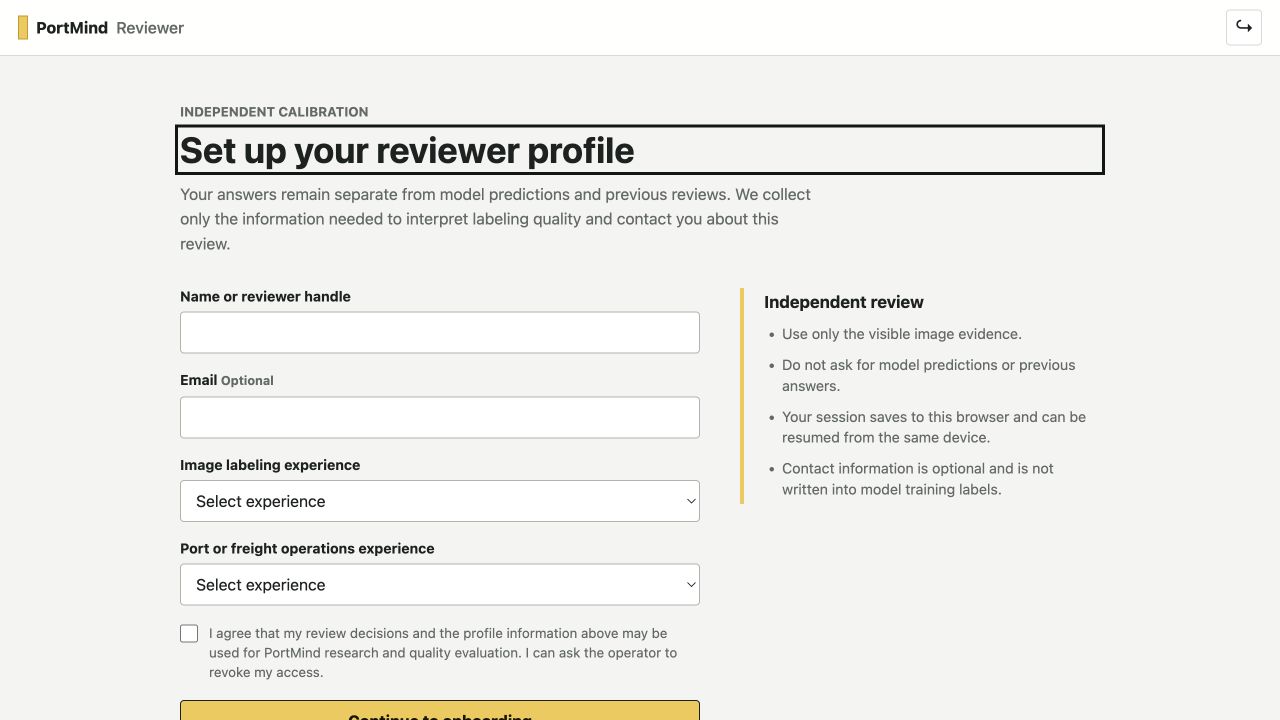
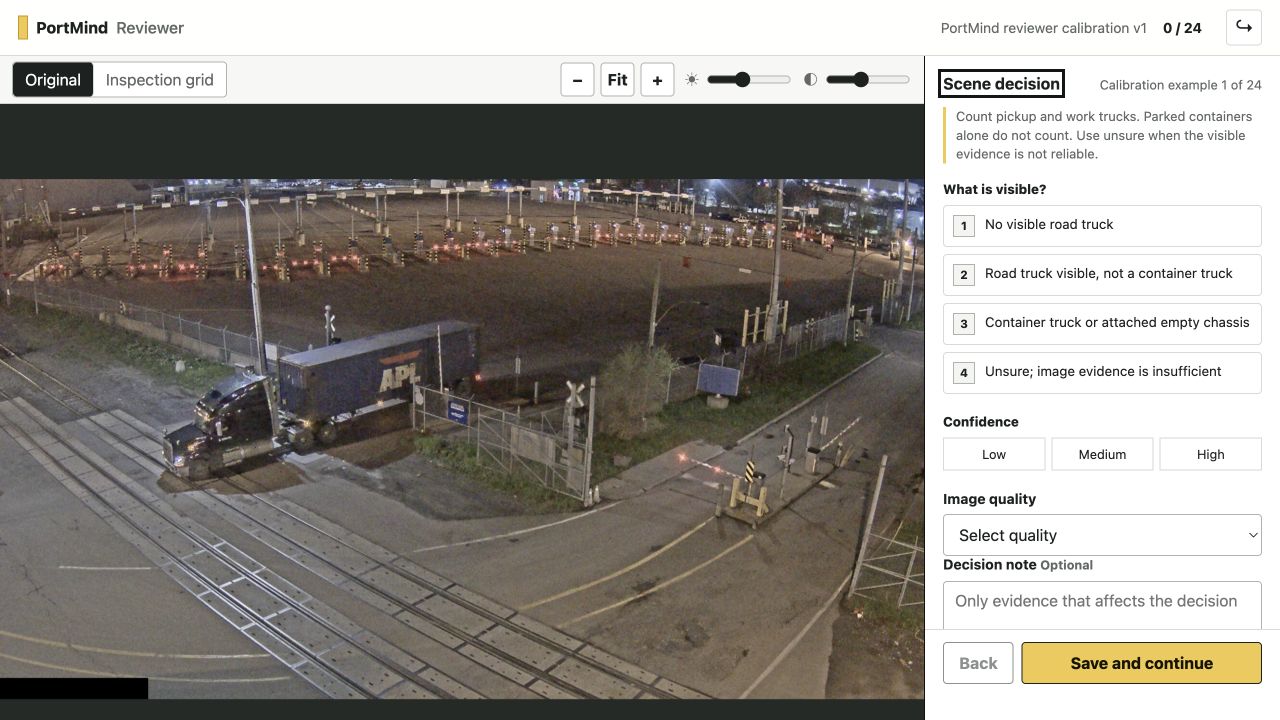
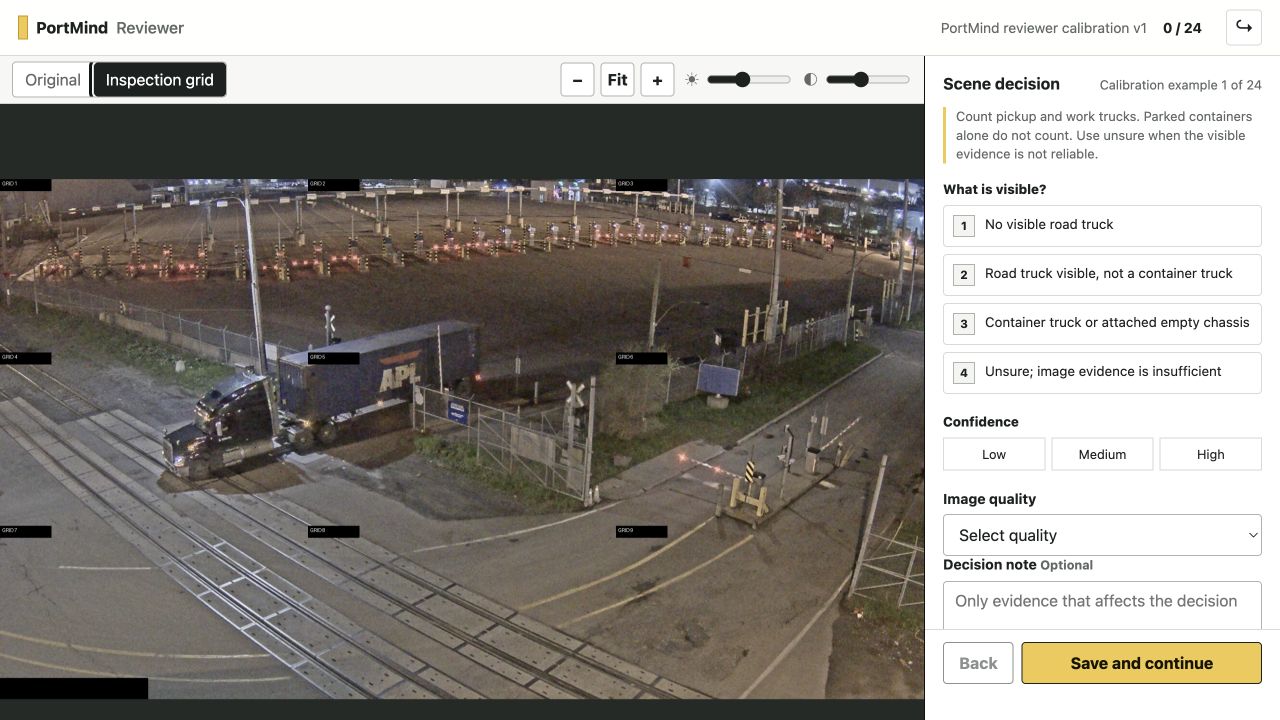
Screenshots from the PortMind reviewer workspace. This is the app itself, not the onboarding video shown in the previous update. Next: complete the first checked set.
The Review Loop
Each image follows the same path from invite to usable record.
- InviteSend a reviewer a scoped link to the assigned work.
- Set the rulesExplain what to look for and what a good decision includes.
- InspectUse the original image and grid view to check difficult scenes.
- RecordSave the decision, confidence, image quality, and a short note.
- PackageMove checked records into the reference set and customer demo.
Next Conversations
Use the next two calls to remove the next blockers.
Choose the structure
Leave with a clear project structure, ownership, and the next workstream to execute.
Validate the first use case
Ask Simon Savard which port workflow is worth testing first and who should evaluate it.
Role reference: Port of Montreal Innovation Hub. Portrait: Startupfest public speaker profile.
Next Seven Days
Finish the first set, then use it to make the next sale.
- Complete the reviewer flow. Open the first set and get every assigned image reviewed.
- Summarize the results. Record where reviewers agree, disagree, or need clearer rules.
- Prepare the customer demo. Show the checked set and one practical port use case.
- Close the loop on both calls. Leave with owners, dates, and one next test.